When Restauration came back
Memory, music, and meaning at Pier 16, New York City

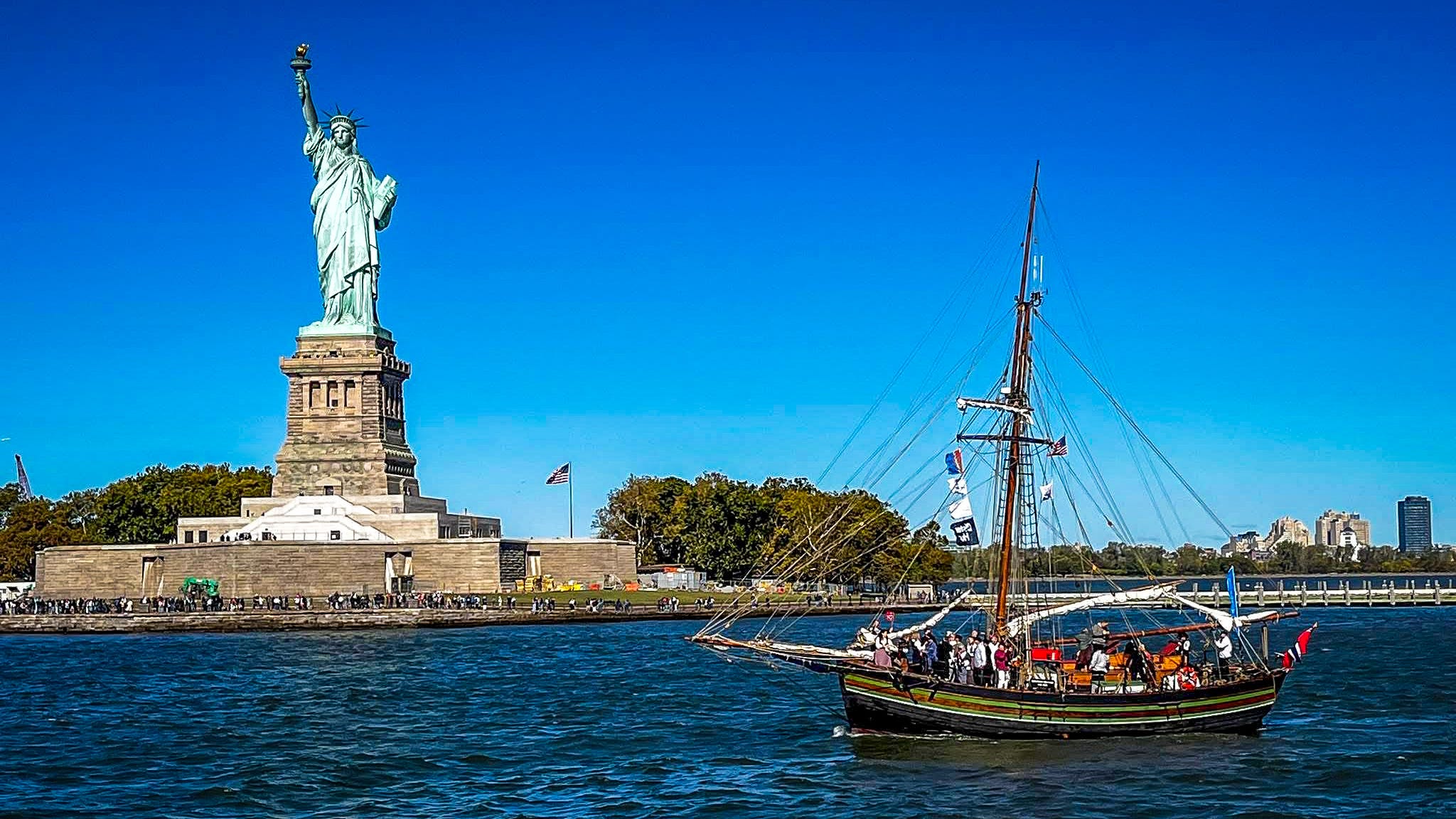
It’s Thursday, October 9, 2025 — 15 degrees, clear sun, and that endless New York motion of people, traffic, and noise. But down at Pier 16, where the East River meets the Upper Bay, something feels different. The Norwegian tricolour waves alongside the Stars and Stripes. A small wooden sloop glides slowly past the Statue of Liberty and turns toward Manhattan. Two centuries after the first Restauration crossed the Atlantic, she is arriving again.
A small boat with a large shadow
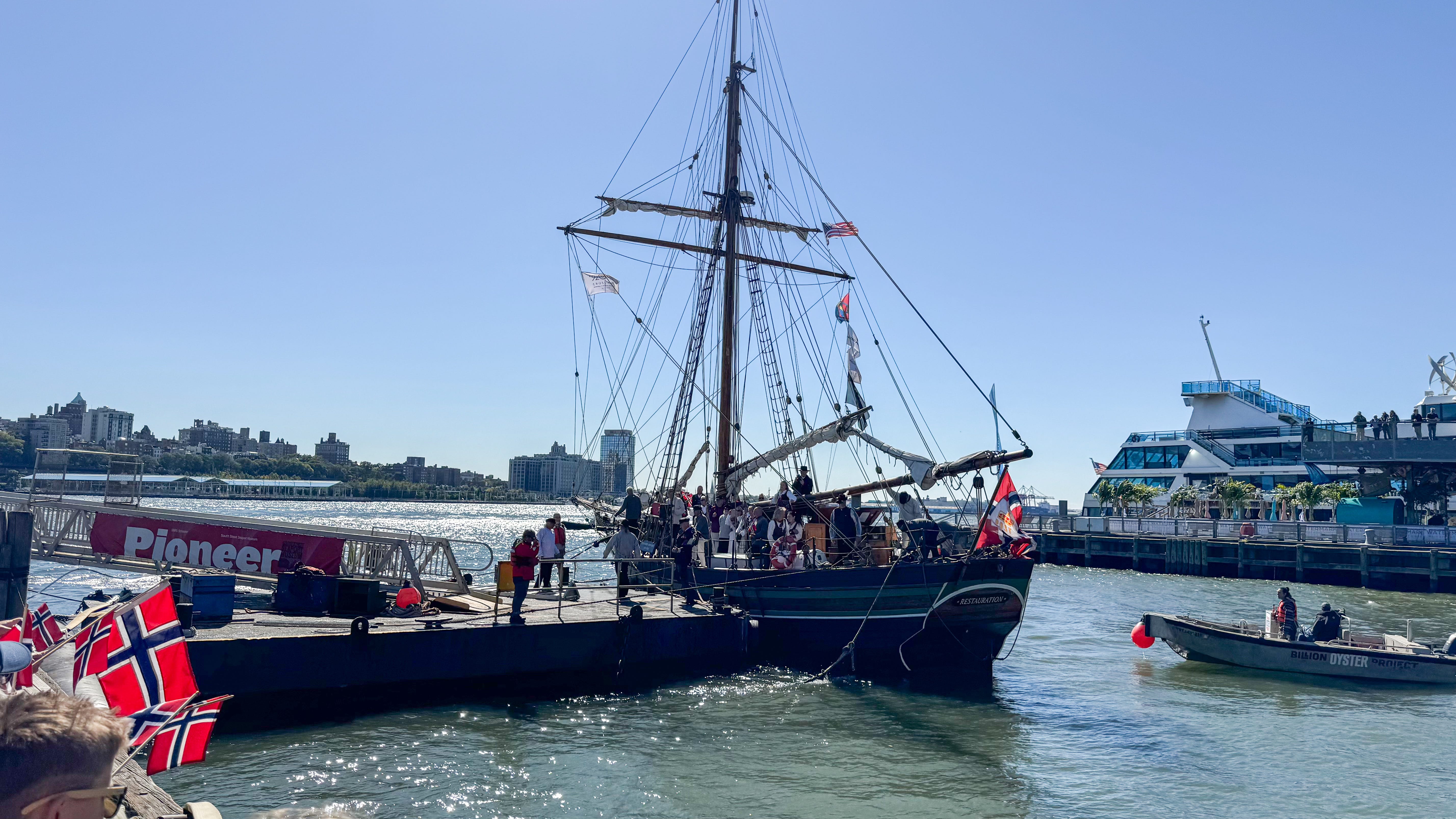
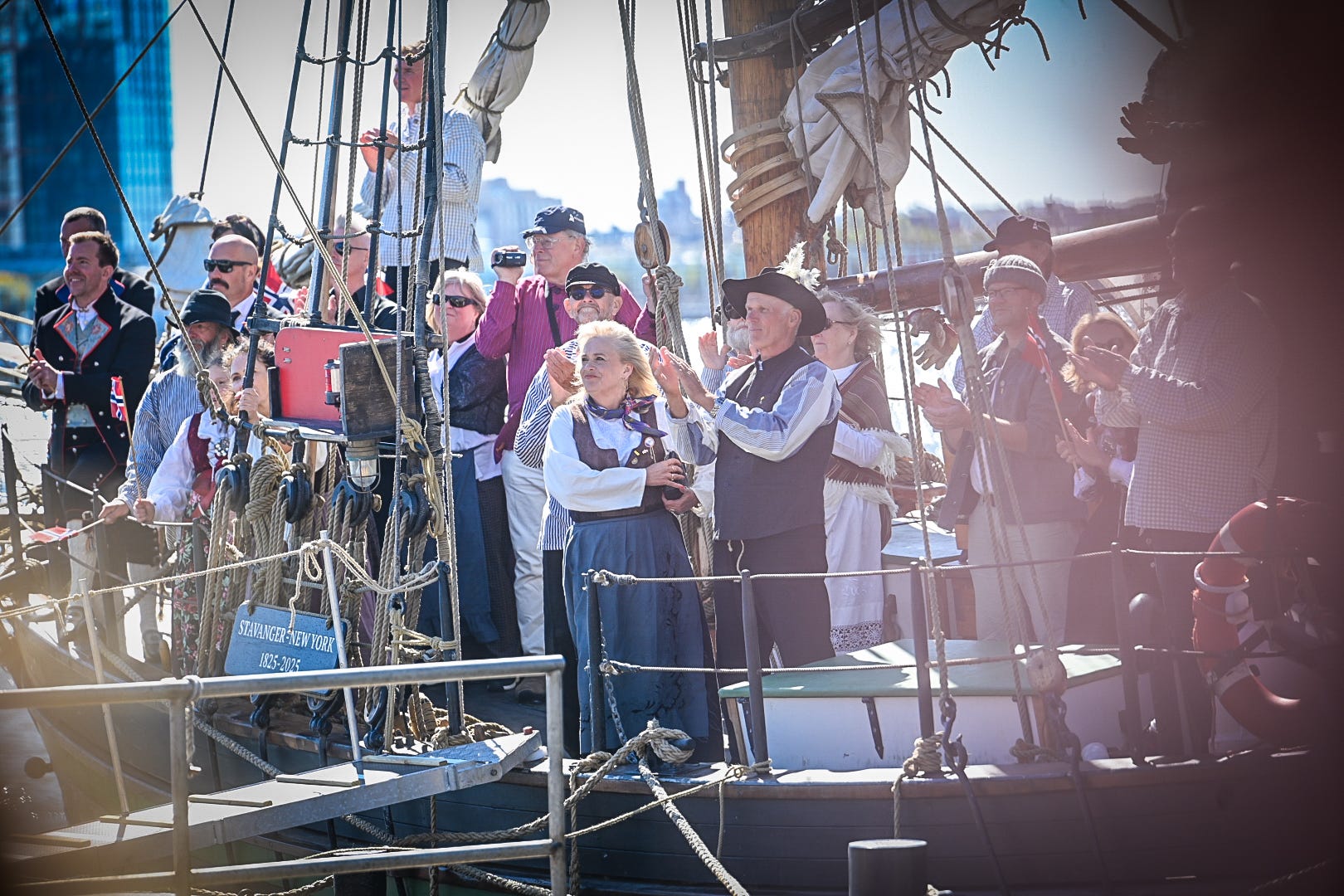
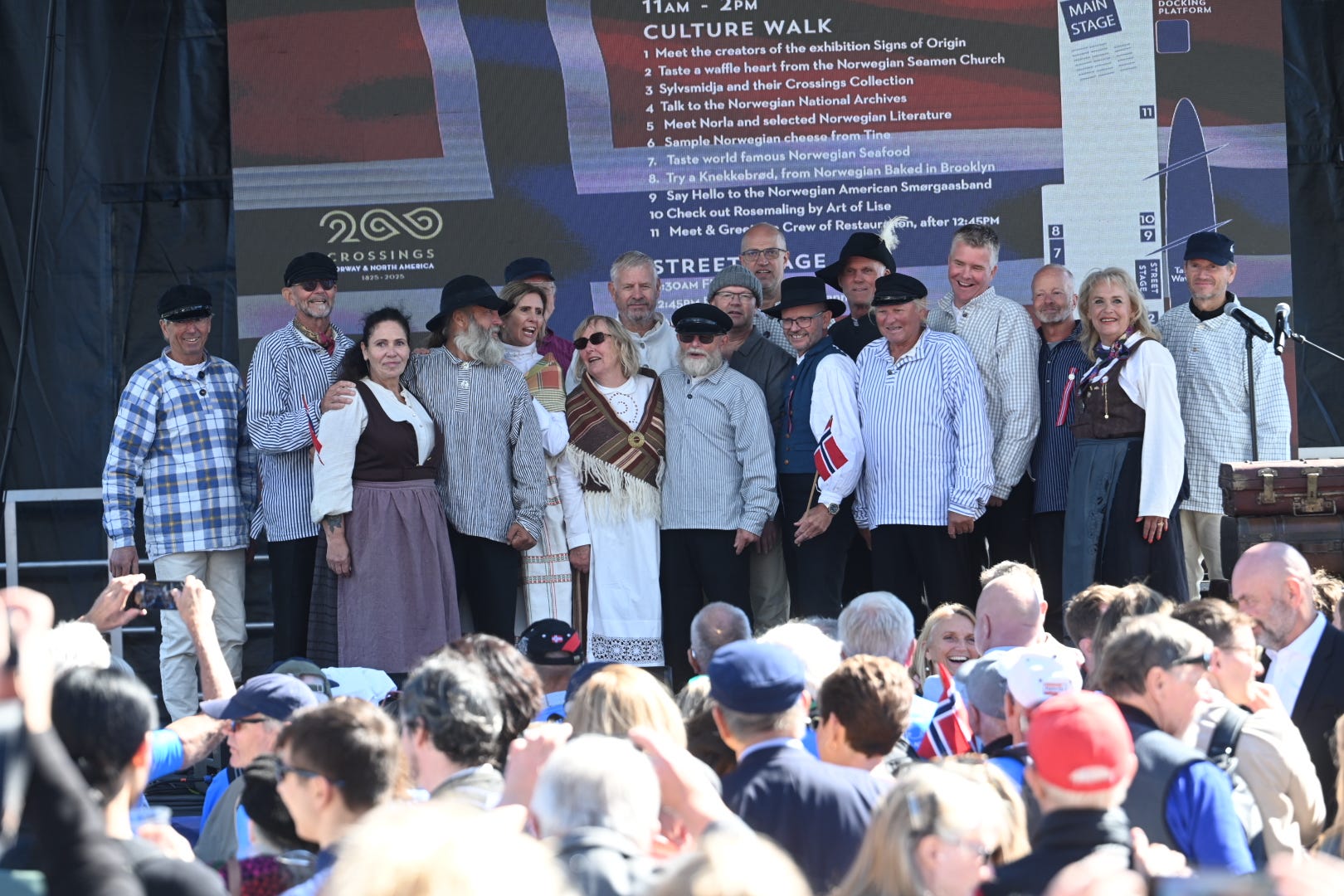
The crowd waiting on the pier is unlike any other in the city that day: Thousands of Norwegians, Norwegian-Americans, and curious New Yorkers. There are bunads, knitted sweaters, Norwegian national-team jackets, and small children holding flags.
Several desendants for The Sloopers where present. Like Kathy Osmond Anderson and Barb Johnson. Large groups of Norwegian-Americans from the Mid-West will spend several days in New York, and hundreds of Norwegian visiting The Big Apple for this occasion.
For a few hours, New York sounds like a trans-Atlantic version of 17th May — a floating, flag-filled national day away from home.
“They didn’t just step onto American soil…”
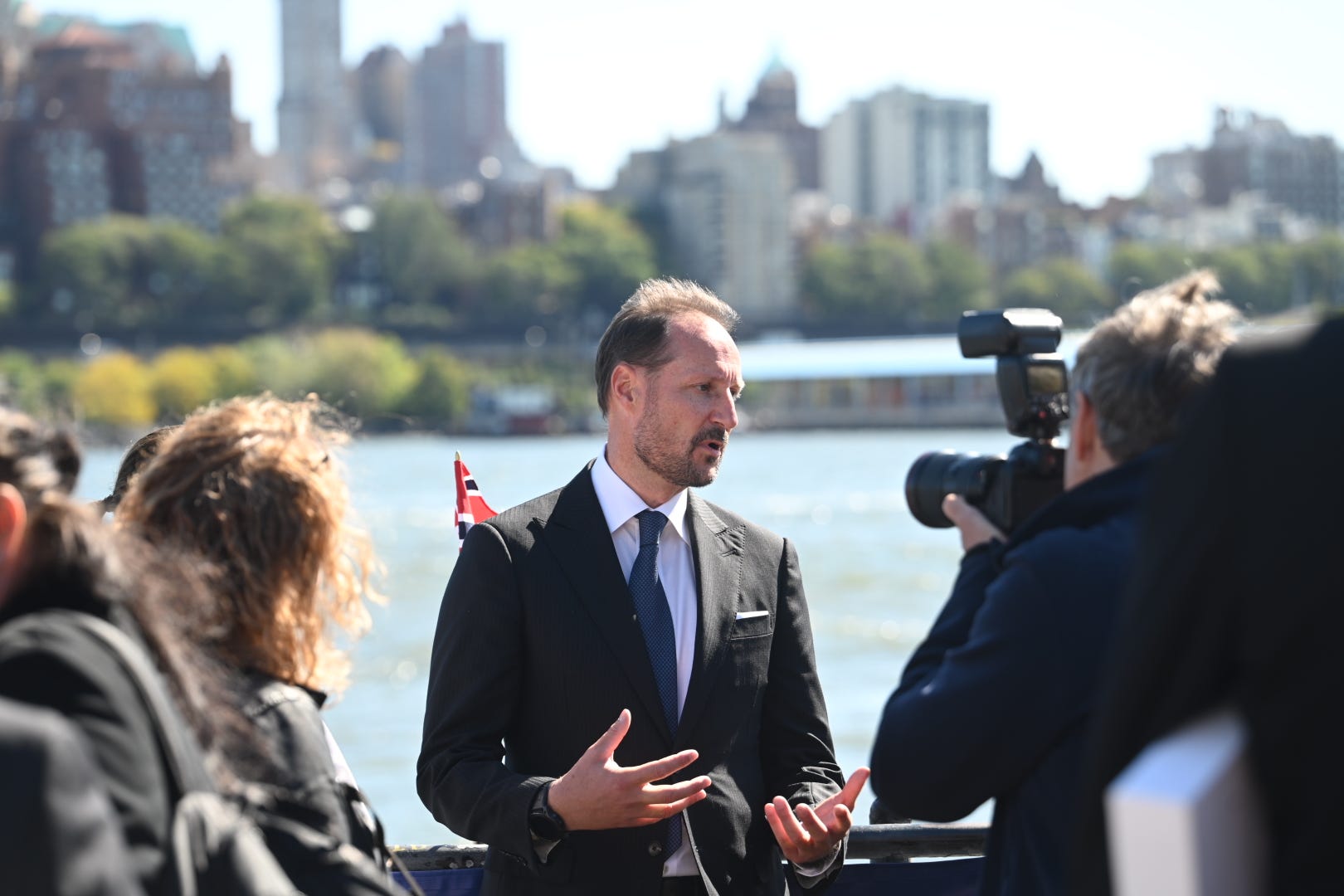
Just around noon, Restauration eases alongside the pier, crew waving from deck. Then Crown Prince Haakon steps to the microphone. His speech folds history and gratitude into ten calm minutes that cut through the noise of the city:
“In 1825, a small ship called the Restauration left Stavanger, carrying 52 brave Norwegians. They didn’t just step onto American soil — they laid the first stones of a new bridge between our two nations.”
He recalls the Restauration’s modern voyage — from Stavanger via England, Madeira, the Virgin Islands, and up the U.S. coast — as “a moving and meaningful way to connect with the past.”
He reminds the crowd that Brooklyn was once “the third-largest Norwegian-speaking city in the world.”
And he thanks New York for “welcoming generations of Norwegian immigrants with open arms.”
Later, speaking to Norwegian reporters, the Crown Prince adds another layer — personal and political:
“For Norway in that period, the United States wasn’t only a friend, but a lifeline.”
He notes that his father, King Harald, lived in America during the Second World War — “He considers the U.S. his second home.” — and recalls studying here himself in 1996 and even spending part of his honeymoon in New York. The link, he says, is both national and familial.
The feeling on the pier
From a nearby speaker, the first notes of music rise: Astrid S opens her set, bright pop vocals soaring over the East River wind. Then the Ragnhild Hemsing Trio steps in with the Hardanger fiddle — a sound that seems to tie the pier back to the fjords.
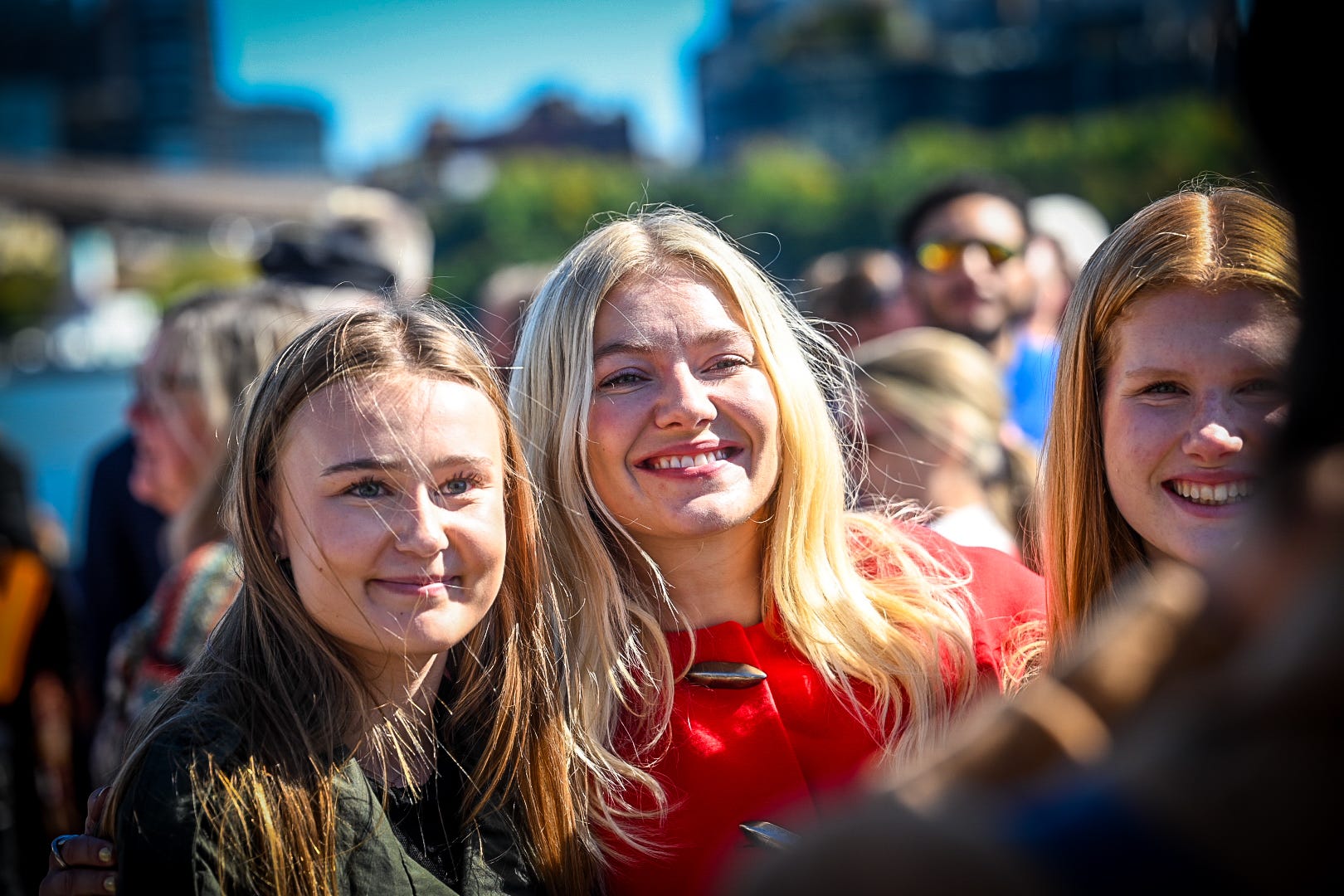
People queue for waffles from The Norwegian Seamen’s Church and for exquisite dishes prepared by the Norwegian National Culinary Team under the auspices of the Norwegian Seafood Council. The samples disappeared quickly. There was accordion music, cheese, rosemaling, and crispbread in beautiful harmony — a taste of Norway on the Manhattan waterfront.
History made tangible
The original Restauration — built in Hardanger in 1801 and renamed several times before her famous voyage — carried 52 souls from Stavanger in July 1825. By the time she reached New York 98 days later, a baby born at sea made them 53. They arrived to less warmth than today: Over-loaded and technically illegal, the vessel was arrested in port before her passengers were released and went on to the Midwest.
That single crossing is considered the start of organized Norwegian emigration to America. In the following century, nearly a third of Norway’s population left for “the land of opportunity.” Today, about five million Americans claim Norwegian ancestry — descendants of journeys that began with a small sloop from Rogaland.
Captain Kjell-Morten Ronæs put it this way:
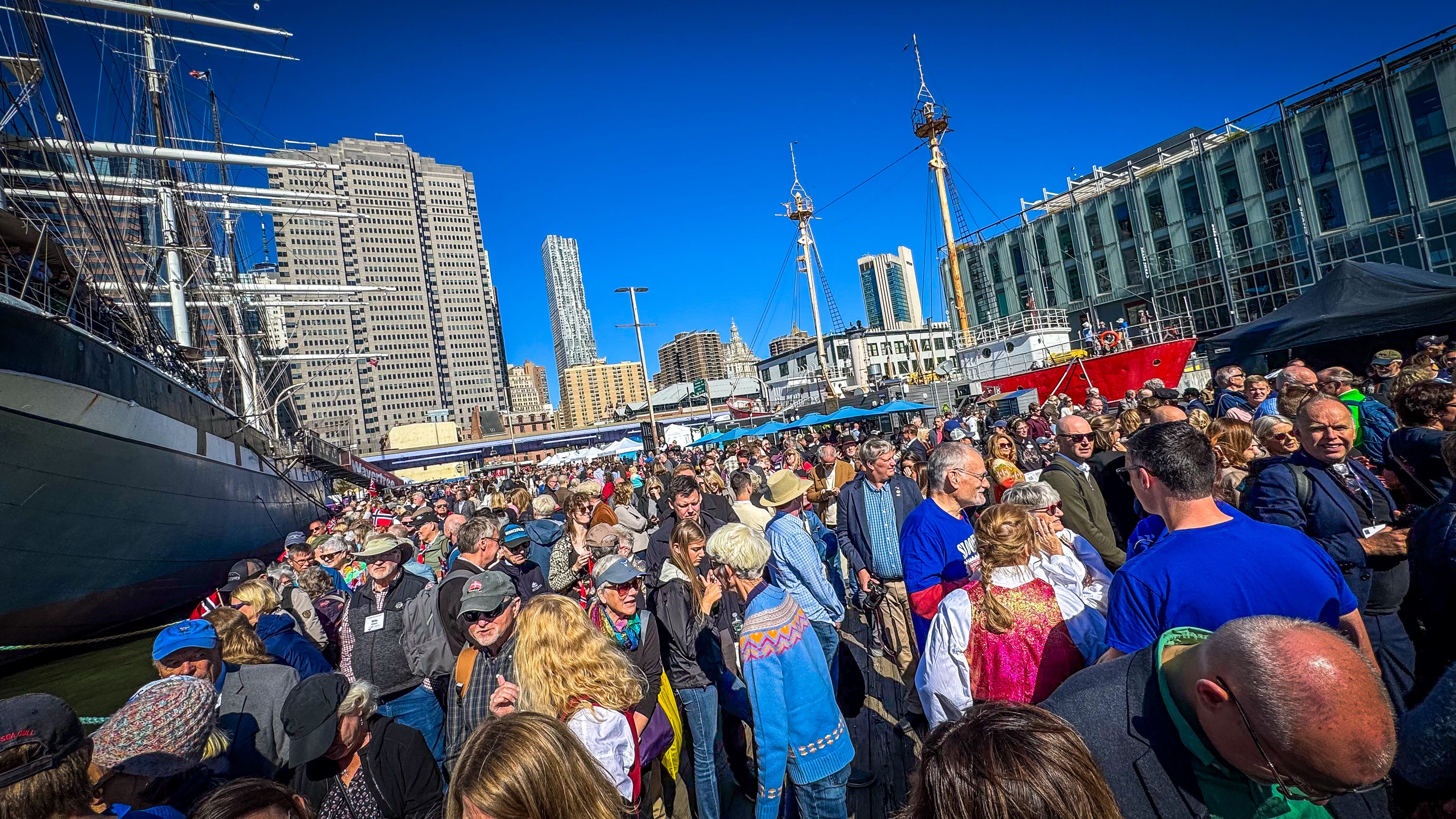
During this incredible journey, we’ve thought a lot and talked about what it must have been like for the original crew 200 years ago. They didn’t have modern tools or the ability to check weather forecasts and watch out for hurricanes. They had to secure food and water. But they made it — and now, 200 years later, so have we.
Among the crowd were many who carried the Restauration story in their own family trees. Kathy Osmond Anderson stood on the pier with her husband Larry and their daughter Monica, representing the Rosdail family, direct descendants of the original Sloopers who left Norway two centuries ago. Nearby, Barb Johnson, descended from the Slogevik line, waved her flag with quiet pride. They were far from alone — dozens of others tracing their lineage back to the 1825 voyage had made the pilgrimage to New York to see history come full circle.
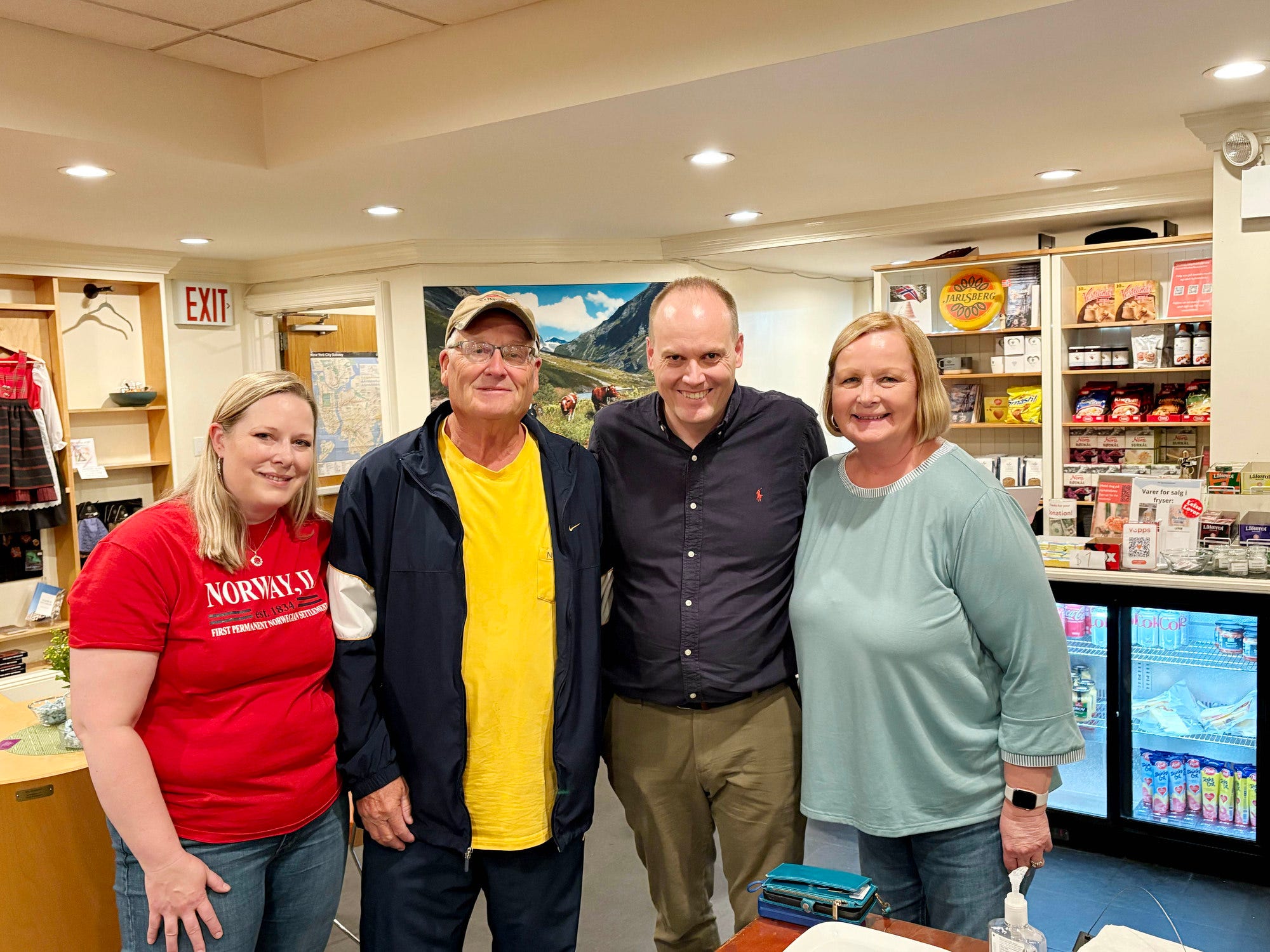
Anderson family: Monica (far left) and Kathy (far right) are direct descendants from one of The Sloopers.
The day also brought together old friends of Norway in other ways. Dave Johnson from the Norsk Museum was there, as was Hank, whose roots go back to Sandnes — he finally met Sandnes Mayor Kenny Rettore on the pier. Reba, a devoted friend of Norway, radiated joy through the crowd.
Between sea and skyline
Pier 16 is no grand stage — just old timbers, museum ships, and the shimmer of the East River — but on this day it feels like a hinge between worlds. To the west rise the towers of Wall Street; to the east, the open Atlantic. The Restauration looks tiny against it all, yet her story fills the space completely. You don’t have to be big to leave a big mark, one observer says — echoing Aftenbladet’s line that the sloop “proved that again today.”
A bridge renewed
For the Norwegian delegation, this day caps Crown Prince Haakon’s week-long U.S. visit — Iowa, Minnesota, then New York — tracing the map of Norwegian America. For those on the pier, it feels more personal: a bridge between memory and belonging.
The Crown Prince’s final words hang in the air:
“This bicentennial isn’t just about looking back. It’s about our relationship today, and in the future. Let’s keep building on that legacy of opportunity and open exchange.”
Two hundred years after the first voyage, a small wooden ship still manages to connect two nations — not through size or power, but through memory, music, and the enduring act of crossing.